Main events:
• Is a ceasefire approaching?
• The Fed will most likely no longer be lowering interest rates
• The CNB expects interest rate increases
Summary of the current situation:
During March, the main topic was the conflict in the Middle East, where the situation changed almost every day. What was originally a 6-day operation has already become a conflict lasting more than a month, and until recently it looked like it would drag on for several more months.
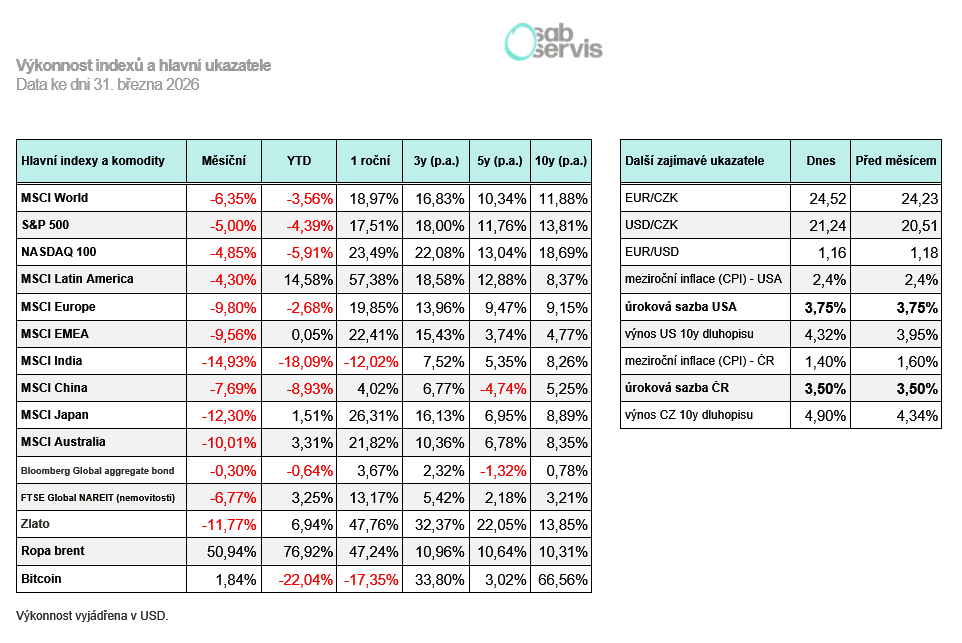
The stock markets reacted with a decline, and the S&P 500 index was as much as 10% below its recent highs. However, this is still only a minor correction, which on average occurs every year. For long-term investors, stock prices during March were a buying opportunity.
The problem, however, is the rising price of oil, which was at 65 USD even before the conflict began. It then rose during the month to as much as 120 USD, which is similar to the levels seen at the beginning of the war in Ukraine.
We see the effects every day in gasoline and diesel prices, and if the situation continues, this will feed into inflation, rising goods prices, and we may face another inflation wave worldwide.
But currently it looks like a ceasefire between the USA and Iran is probably closer than investors expected. Trump kept threatening Iran that he would attack its energy infrastructure and intensify pressure further. In the end, however, Iran’s leadership declared that attacks would be suspended for the following 2 weeks, and Trump subsequently confirmed it and declared it a major success for the USA.
At the same time, the Strait of Hormuz was opened by Iran, and ships can now pass through relatively safely. Through Pakistan, Iran presented the USA with its 10-point proposal for a peace plan, and negotiations will continue in the coming days. It therefore appears that there has not been much of a shift in the conflict on the part of the USA either, and they would rather conclude a ceasefire with Iran and end the war.
But it is certainly not over—Iran, the USA, or Israel could throw a wrench into it and the war could continue. The day after, on 8 April, stock indices reacted with gains of up to 3%, and we are slowly approaching new highs. The oil price is also reacting with a decline, but it has only fallen to around 95 USD, which will still have an impact on future inflation.
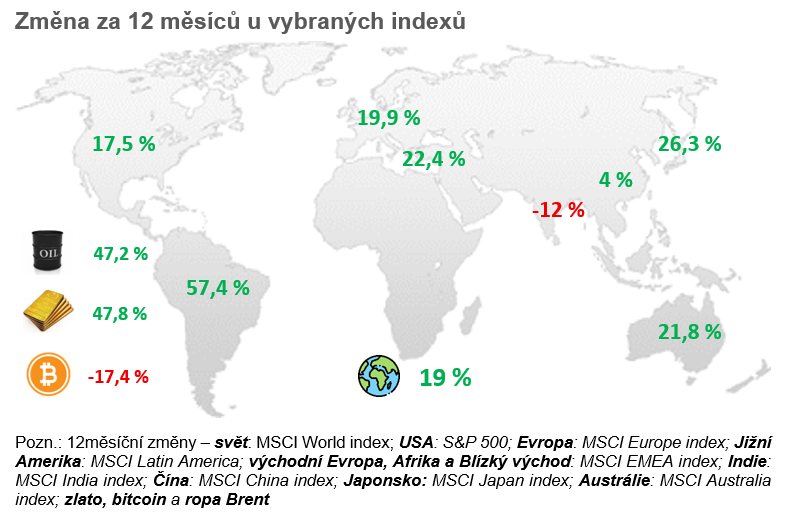
And how did other assets perform? The price of gold rose slightly after the conflict began, but eventually declined during March by as much as 20%. So even gold did not protect us from the war and stock market declines. Investors likely expected the military conflict earlier, which is why precious metals had already risen in previous years. We are now at a price of around 4,800 USD.
Bitcoin is still holding in the 65,000–75,000 USD range, and we are currently at around 71,000 USD.
Macro summary:
But let us move on to the important macroeconomic indicators and begin with the CNB meeting held on 19 March 2026. Here, it was unanimously voted to keep interest rates at the current 3.5%. Going forward, the CNB will no longer reduce interest rates; rather, it expects to increase them toward the end of the year.
The year-on-year inflation rate in the Czech Republic for February came in at 1.4%. However, we certainly do not need to fear deflation and falling prices, because due to rising fuel prices, inflation will rise again. And with that, likely also the prices of goods and other related services.
The American central bank held its meeting on 18 March 2026 and decided to keep interest rates at 3.75%. As for expectations going forward, just a month ago one to two interest rate cuts by the end of the year were anticipated. After the conflict began, the Fed has become more cautious, and the trend is rather reversing from rate cuts to slight interest rate increases.
The year-on-year inflation rate for February in the USA again came in at 2.4%, which was in line with expectations. Going forward, however, inflation is already expected to rise, and in the short term it could exceed 3% due to the conflict.
March unemployment data in the USA ultimately came in at 4.4%, in line with expectations.
At its meeting on 19 March 2026, the ECB also kept interest rates unchanged at the current level of 2.15%. At present, due to rising fuel prices, there could even be a slight increase in interest rates.
As for the year-on-year inflation results in Europe, for the month of February it came in at 1.9%, in line with expectations.
Czech Republic:
The year-on-year inflation rate in the Czech Republic for February came in at 1.4%. However, we certainly do not need to fear deflation and falling prices, because due to rising fuel prices, inflation will rise again. And with that, likely also the prices of goods and other related services.
On 19 March 2026, the CNB meeting took place. Here, it was unanimously voted to keep interest rates at the current 3.5%. Going forward, the CNB will no longer reduce interest rates; rather, it expects to increase them toward the end of the year.
Yield of 5-year IRS (interest rate swaps for mortgages)
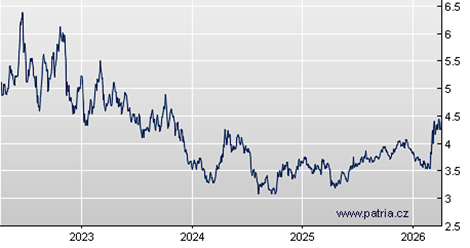
Source: patria.cz
However, because of the conflict, mortgage interest rate swaps unexpectedly rose. At one point to as much as 4.5%. Over the last year, the trend has therefore been upward, and this will likely put pressure on mortgage rates to increase. Some banks have already proceeded with increases of up to 0.5%.
So far, the average interest rate agreed on mortgages is still moving slightly below 5%, specifically at 4.89% for March.
USA:
The year-on-year inflation rate for February in the USA again came in at 2.4%, which was in line with expectations. Going forward, however, inflation is already expected to rise, and in the short term it could exceed 3% due to the conflict.
March unemployment data in the USA ultimately came in at 4.4%, in line with expectations.
The American central bank held its meeting on 18 March 2026 and decided to keep interest rates at 3.75%. As for expectations going forward, just a month ago one to two interest rate cuts by the end of the year were anticipated.
Interest rate in the USA (current forecast)
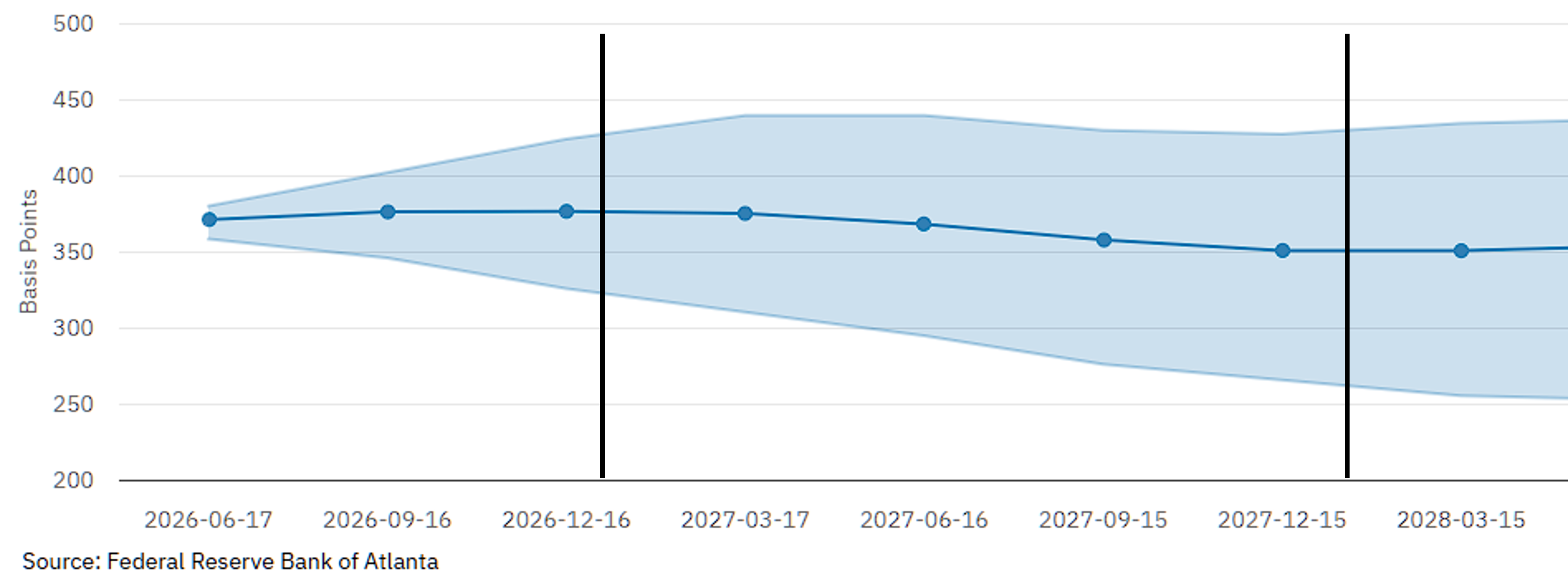
After the conflict began, the Fed has become more cautious, and the trend is rather reversing from rate cuts to slight interest rate increases. In that context, yields on US bonds also rose, and bond prices therefore ended up declining slightly during March.
The S&P 500 index fell by several percent during March, ending at minus 5%. At one point it was as much as 10% below its highs, but this is a common correction that on average repeats once a year.
Europe:
As for the year-on-year inflation results in Europe, for the month of February it came in at 1.9%, in line with expectations.
At its meeting on 19 March 2026, the ECB also kept interest rates unchanged at the current level of 2.15%. At present, due to rising fuel prices, there could even be a slight increase in interest rates.
ECB interest rate
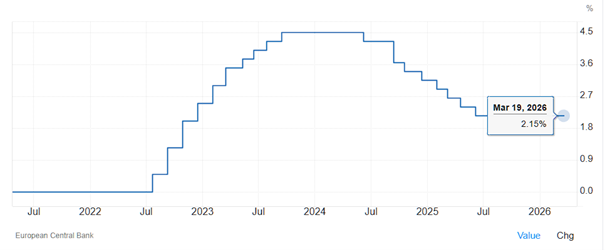
Source: www.www.tradingeconomics.org
Europe was heavily affected by the conflict, and European indices fell by as much as 10% in March. Specifically, MSCI Europe lost 9.8% in dollar terms, which is more than the S&P 500 index. This is partly due to the greater increase in energy prices and the overall larger impact on European industry.